Concrete Pumping in Ocala, FL
A trailer-mounted line pump, our own operator, and hose to wherever the forms are. The mixer truck stays on the hard road; the concrete goes where you need it.
Most concrete jobs go wrong at the same point: getting the mud from the truck to the forms. A ready-mix truck weighs the better part of seventy thousand pounds loaded, and on the sugar sand that covers most of Marion County it will sink, rut the lawn, or simply refuse to get within reach of the pour. Wheelbarrows are slow, they wear out a crew, and by the time the last load is placed the first load is already going off. A line pump solves all of that in one move.
We run a trailer-mounted concrete line pump. It hooks to the truck, parks on the driveway or the road, and pushes concrete through steel and rubber line to the pour, a few hundred feet if the job calls for it, around the house, through a gate, down a slope, into a back yard a truck could never reach. Our operator sets the line, primes the pump, manages the pour rate with your finisher or your mason, and cleans out at the end. You get placed concrete, not a piece of equipment to figure out.
The work we pump most is house slabs and monolithic foundations, footings, block-cell grout for stem walls and tie beams, garage and workshop slabs, pool decks and lanais behind existing homes, and any commercial pour where the truck can't get near the forms. Line pumps are built for the mixes that matter here: pea-gravel and grout mixes flow beautifully, and standard 3/4-inch stone slab mix pumps fine with the right slump.
We're a concrete contractor first, which changes how we pump. We understand what the finisher needs on the other end of the hose, how fast a stem wall can take grout without blowing out a cell, and when to slow the pour so a slab doesn't get ahead of the screed. We serve builders, masons, pool companies and homeowners across Ocala and Marion County, and we travel to Gainesville, The Villages, Lake and Citrus counties for pumping work regularly.
What's included
- Trailer-mounted line pump, operator included on every job
- Slabs, footings, monolithic foundations and garage floors
- Block fill, stem walls, lintels, tie beams and cell grout
- Pool decks, lanais and back-yard pours with no truck access
- Pea-gravel, grout and standard slab mixes
- Setup, line placement, pour management and cleanout handled by us
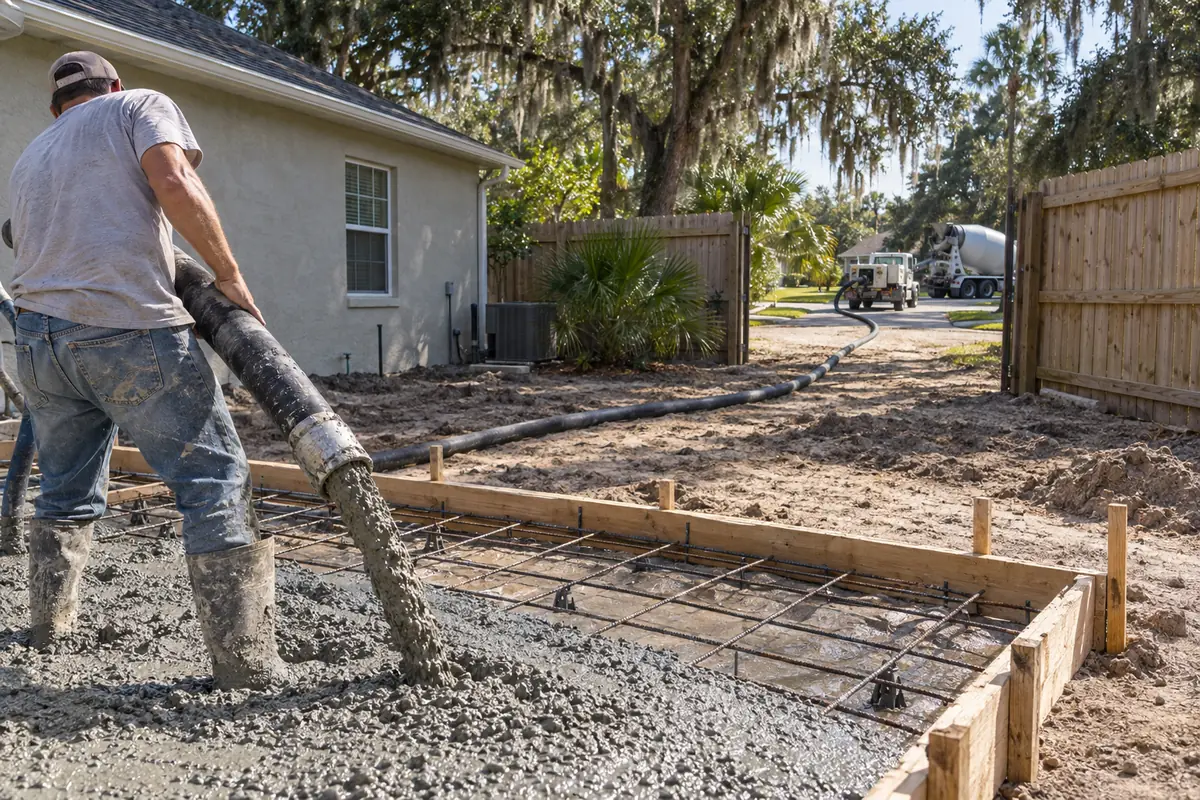
How the pour actually goes
Concrete Pumping across Marion County and beyond
The pump travels. We run it across Marion County and regularly into Lake, Sumter, Citrus and Alachua counties for builders and masons. Each town below has its own page.
Concrete Pumping: what people ask first
How much does concrete pumping cost?
Pumping is priced by the job, usually as a base rate that covers the pump, the operator and a set number of hours, plus extra line footage and time beyond that. Distance from our Silver Springs yard, the mix, and how far the concrete has to travel from the truck all move the number. Tell us the pour size, the site and the date and we quote it before anything is scheduled. The cost guide on this site explains what drives the price.
Do you have a boom pump?
No. We run a trailer-mounted line pump, which is the right tool for slabs, footings, block fill and residential and light-commercial pours. It places concrete anywhere hose can reach, including places a boom can't get to for overhead lines or tight streets. If a job genuinely needs a boom, we'll tell you that straight rather than sell you the wrong equipment.
How far can you pump concrete?
Several hundred feet horizontally is routine for a line pump with a pumpable mix. Vertical lifts and long runs need a mix ordered with pumping in mind, so tell us the site layout when you book and we'll tell the batch plant what to send.
What do I need to have ready before the pump arrives?
Forms and steel done and inspected if required, a clear parking spot for the mixer truck and the pump on firm ground, a path for the line, water on site for cleanout, and your finishing crew ready. We'll walk through it on the phone when we schedule, and we can visit the site first for larger pours.
Goes with this
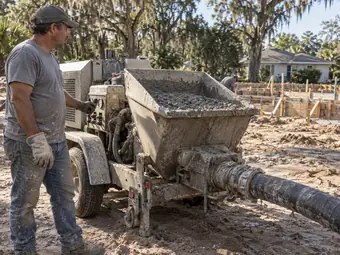
Concrete Pump Rental With Operator
Book the pump and the operator by the pour. No learning curve, no cleanout headache.
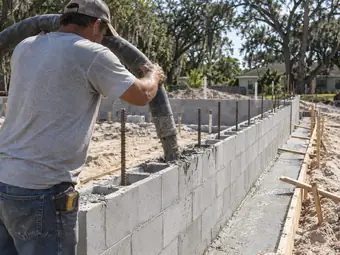
Block Fill & Stem Wall Pumping
Grout pumped into block cells, lintels and tie beams for masons and builders. Solid, fast, inspected.
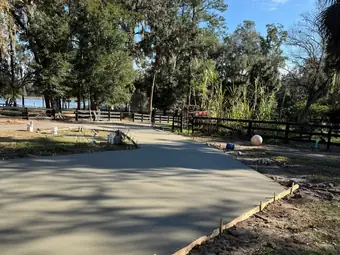
Concrete Slabs & Foundations
House slabs, monolithic foundations, garage and shop floors, and pads for metal buildings.
Price this job
Send the yardage, the site and the pour date. We will tell you how much line it needs, what to order from the plant, and what it costs.
- Measured and priced before anything is scheduled
- Based in Silver Springs, working all of Marion County
- Operator included on every pump job
Tell us about the pour.
Send the size, the site and the date and we will come back with a firm price. Builders and masons: send the plan and we will price the pump into your bid.